The festival
Durga Puja
Five days each autumn, Bengal turns its streets into galleries and its neighbourhoods into hosts. Durga Puja is at once a religious observance, a public art season and the largest annual gathering of Bengalis anywhere in the world.
The worship of Durga in Bengal draws on a long textual tradition, but the festival as it is recognised today took its public shape in the eighteenth and nineteenth centuries. Household pujas held in the courtyards of landed families gradually gave way to the barowari or sarbojanin puja — a subscription festival organised by a neighbourhood for everyone in it.
That shift is what made Durga Puja a civic event. Committees raise funds street by street, commission artists, build temporary architecture, arrange food, health posts and crowd management, and dismantle everything within a fortnight. The scale is extraordinary: in Kolkata alone, several thousand pujas are registered each year.
The idol itself is made of unfired clay over a straw and bamboo armature, largely in the Kumartuli quarter of north Kolkata, and returns to the river at the end of the festival. The cycle of making and immersion — creation, presence, departure — is the festival's central idea.
Ritual calendar
The five days, and the day before them
Timings vary by almanac and by committee. Pandal pages on this portal publish the schedule confirmed by each organising body.
| Day | Principal rite | Observance |
|---|---|---|
| Mahalaya | Pitri Tarpan and Devi Paksha | Recitation of the Chandipath at dawn marks the invocation of the goddess and the end of the fortnight of ancestors. |
| Maha Shashthi | Bodhon and Adhibas | The idol is unveiled; the goddess is awakened and welcomed into the pandal. |
| Maha Saptami | Nabapatrika Snan | Nine plants bound together are bathed at first light and installed beside the deity. |
| Maha Ashtami | Sandhi Puja and Anjali | The most attended day; offerings at the junction of Ashtami and Navami and community bhog. |
| Maha Navami | Homa and Kumari Puja | The fire ritual concludes the sequence of worship; young girls are honoured as the living goddess. |
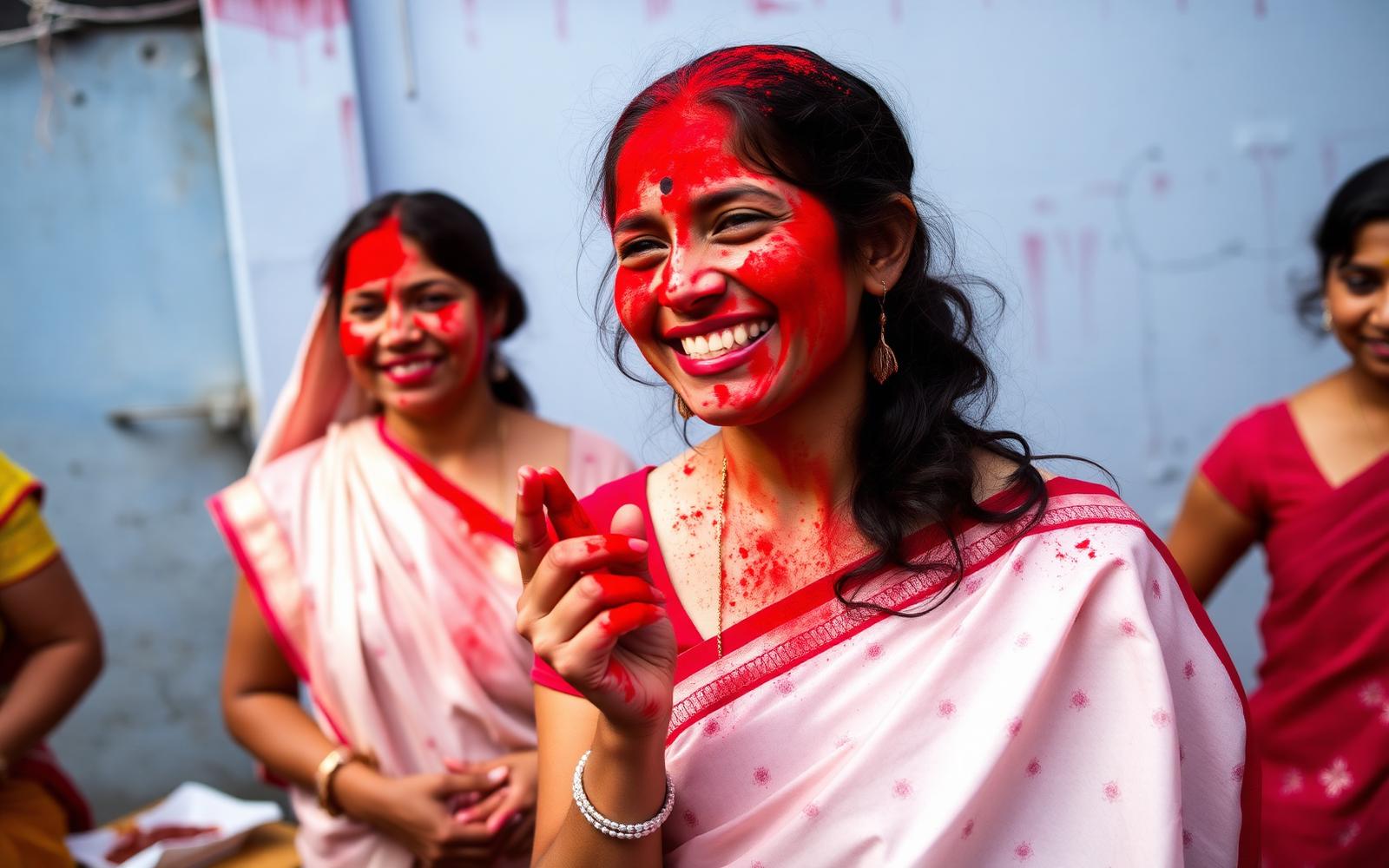
| Bijoya Dashami | Sindoor Khela and Bisarjan | Farewell rites, vermilion play and the immersion procession to the river. |
Iconography
Reading the tableau
01
Durga
Ten-armed, astride a lion, spear driven into Mahishasura at the moment of victory.
02
Lakshmi and Saraswati
Placed to either side as daughters in the Bengali family reading of the tableau.
03
Ganesha and Kartikeya
Sons completing the household; the banana-plant bride stands beside Ganesha.
04
Chalchitri
The painted arch behind the group, traditionally showing scenes from the Puranas.
Continue
Where to go next
Discovery · Programme · Travel